






Why the UK's Life Sciences Growth Ambition Has an Energy Problem
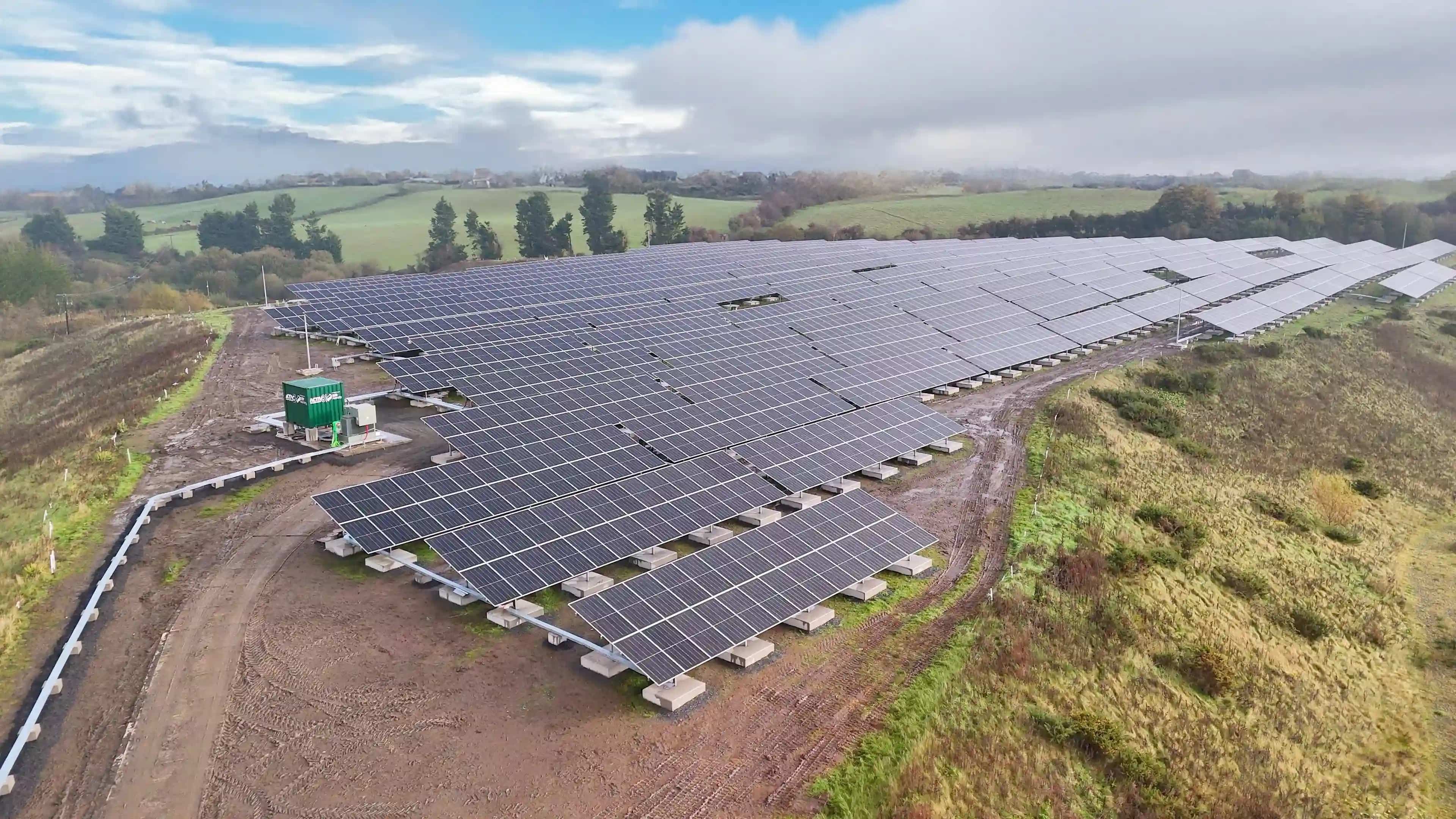
As the UK seeks to expand its life sciences manufacturing base and attract new investment, the sector faces a less visible challenge: how to power the next generation of laboratories, production facilities and advanced manufacturing sites competitively and sustainably.
The UK has made no secret of its ambition to grow its life sciences sector.
The Government’s 2026 Life Sciences Sector Plan places growth, investment, manufacturing and scaling businesses at the centre of its strategy, backed by more than £2bn of government funding alongside UKRI and NIHR investment. It also identifies electricity prices as a barrier to investment, noting that UK industrial electricity costs are significantly higher than in comparable countries. Read the Life Sciences Sector Plan.
That creates an interesting tension.
The UK wants more life sciences manufacturing. It wants businesses to scale. It wants new facilities and investment.
But scaling life sciences also means scaling energy demand.
And that raises a question that deserves more attention: can the UK’s energy infrastructure and cost base keep pace with its life sciences ambitions?
Energy is Becoming a Competitiveness Issue
Energy has traditionally been treated as an operating cost sitting somewhere in the background of a manufacturing business.
For modern life sciences facilities, that is increasingly difficult to sustain.
Pharmaceutical manufacturing, laboratories and advanced therapies can require tightly controlled environments, continuous ventilation and HVAC, refrigeration, process equipment, compressed gases, specialist IT infrastructure and other energy-intensive systems.
At the same time, manufacturers across the UK are reporting significant pressure from electricity costs.
A July 2026 report from Make UK found that 90% of manufacturers had seen their energy bills increase since 2022, while more than half identified energy costs as their biggest business challenge. Thirteen per cent said further price increases could threaten their viability. Read the Make UK report.
For a sector competing globally for investment and manufacturing capacity, that matters.
The question is no longer simply how a life sciences business can reduce its carbon footprint.
It is increasingly how it can manage the cost, resilience and carbon intensity of the energy required to grow.
The Sector is Already Changing How It Thinks About Facilities
This is particularly relevant as the nature of pharmaceutical manufacturing changes.
Bionow’s recent examination of the transformation of UK life sciences manufacturing highlighted the move towards increasingly complex modalities, smaller batch sizes, single-use technologies and facilities that need to be more flexible and scalable. It also identified energy efficiency as an increasingly important component of controlling operating costs. Read Bionow’s analysis.
That means the conversation about infrastructure needs to broaden.
When a facility is being designed, expanded or modernised, energy cannot necessarily be considered separately from the wider operational strategy.
What will electricity demand look like five or ten years from now?
How much of that demand will occur during daylight hours?
How much generation could be produced on site?
Could storage play a role?
What additional demand might come from electrification?
And what happens if the business expands production?
These aren’t exclusively sustainability questions. They are questions about the long-term economics and resilience of the facility.
A North-East Example Shows What is Possible
There is already a very relevant example close to home.
Piramal Pharma Solutions has announced a 4.3MWp ground-mounted solar installation at its integrated drug substance and drug product facility in Morpeth, Northumberland.
The project will comprise around 6,200 panels across 16 acres and is expected to generate approximately 3,950MWh of renewable electricity each year, equivalent to around 22% of the site’s annual electricity demand. The project is being delivered behind the meter through a power purchase agreement, with operations scheduled to begin in Q1 2027. Read the full Piramal Pharma Solutions announcement.
The significance isn’t simply the size of the solar installation.
It is what the project says about the changing role of energy within a major pharmaceutical manufacturing facility.
Piramal isn’t attempting to make the site electrically independent. Solar generation will form one part of the site’s wider energy system, reducing the amount of electricity that needs to be purchased from the grid while supporting its longer-term decarbonisation objectives. Read more about the project.
That distinction is important.
The question isn’t whether solar can replace the grid. It’s how much of a business’s electricity demand could be met through onsite generation — and what that could mean for its long-term energy strategy.
The answer will look different from one facility to the next. Electricity consumption, operating hours, available roof or land, grid connection, future expansion plans and capital requirements all influence the case for solar.
For some businesses, rooftop solar may provide a meaningful source of onsite generation. For others, a larger ground-mounted system could offer greater potential. Battery storage may also have a role where generation and demand don’t naturally align, while EV charging and wider electrification can create additional opportunities to use locally generated electricity.
The starting point, therefore, shouldn’t be the number of solar panels that can fit on a site. It should be understanding how that business uses electricity — and where onsite generation could fit into the picture.
There Isn’t a One-Size-Fits-All Answer
The Morpeth project is significant, but it shouldn’t be interpreted as a template that every life sciences facility can simply replicate.
Every site has a different electricity profile, roof or land availability, grid connection, operating schedule and capital structure.
For some businesses, rooftop solar may provide a meaningful source of onsite generation.
For others, ground-mounted generation could offer greater capacity.
Battery storage may have a role where there is a mismatch between generation and demand.
EV charging and wider electrification can introduce new electrical loads.
And intelligent energy management can help businesses understand when and where electricity is actually being consumed.
The starting point therefore shouldn’t be the number of solar panels that can fit on a roof.
It should be the energy profile of the business.
Looking Beyond the Cost of Grid Electricity
The Government is already recognising that energy costs can influence the UK’s industrial competitiveness. Its Life Sciences Sector Plan includes measures intended to reduce electricity costs for eligible businesses from 2027, alongside wider action to improve the UK’s energy infrastructure.
But reducing the cost of electricity purchased from the grid is only one part of the equation.
Businesses can also look at how much electricity they need to purchase in the first place.
That is where onsite generation becomes increasingly relevant. By generating electricity at the point of use, businesses can potentially reduce their reliance on grid-supplied power while making greater use of their own available assets.
For life sciences companies planning expansion, investment or changes to their facilities, that raises a broader question: could energy generation become part of the infrastructure supporting future growth, rather than simply another operating cost?
The Next Question for Life Sciences Businesses
The UK’s life sciences sector has a significant opportunity in front of it.
But growth requires infrastructure, and infrastructure requires energy.
As the sector moves towards more sophisticated manufacturing, more flexible facilities and greater levels of automation, energy strategy should become part of that conversation rather than an afterthought.
The question for individual businesses is therefore relatively straightforward:
What could your facility generate, what will it need, and what will that mean for the cost of growth?
For some sites, the answer may be solar. For others, it may be a broader energy strategy.
Either way, understanding the opportunity starts with understanding the building and its electricity demand.
That is where a commercial energy assessment can provide the starting point.
Activ8 Energies helps businesses assess and implement renewable energy solutions designed around their operational and energy requirements. To discuss the potential for onsite generation at your facility, contact the Activ8 Energies commercial team.