
Pharma Manufacturing 2026: Where northern manufacturing strength meets future innovation
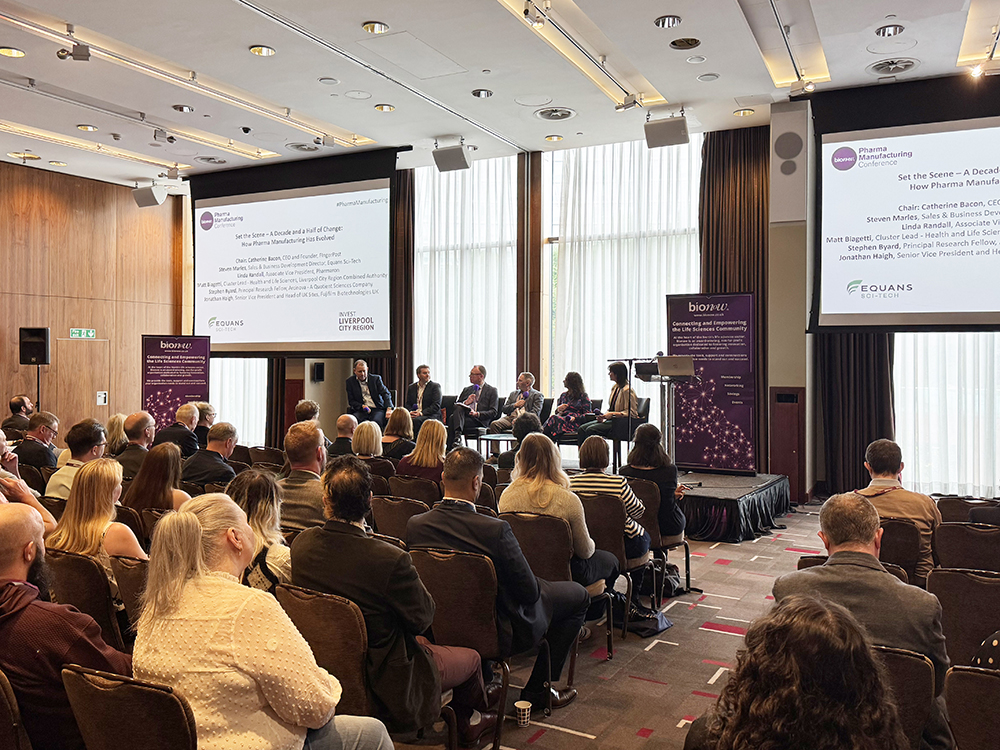
Liverpool played host to the sold-out Bionow Pharma Manufacturing Conference this year, bringing together over 200 delegates, exhibitors and speakers. The event fostered open discussion between industry leaders, academics and regulatory experts and across a programme of talks, panels, exhibition and networking, the focus remained firmly on the challenges to address and the opportunities ahead for the sector.
The agenda reflected the breadth of activity across the sector, opening with a “set the scene” panel exploring how pharma manufacturing has evolved over the past 15 years. Throughout the day, sessions focused on emerging technologies and advanced therapies, alongside the growing role of automation, digitalisation and AI in manufacturing environments. Discussions also looked ahead to the future workforce, with a dedicated panel on skills, talent development and career pathways, highlighting the importance of building a resilient and adaptable talent pipeline for the sector.
Presenting at the conference were two keynote speakers: Senior Vice President and Head of UK Sites at FUJIFILM Biotechnologies UK, Jonathan Haigh and Stephen Byard, Principal Research Fellow at Arcinova.
The first presentation of the day, “Establishing a Multi-Modal Biomanufacturing Campus in the UK: From Process Invention to Commercial Manufacturing”, outlined how one global life sciences manufacturer is building an integrated biomanufacturing campus in the UK that can support therapies from early development through to large-scale commercial production. Rather than relying on a single facility or technology, the model brings together multiple manufacturing approaches, development capabilities and supply functions in one connected network, with the aim of making it easier to move products from discovery and clinical testing into full production. This was also framed in the context of the company’s broader heritage in healthcare, advanced manufacturing and innovation, presenting that wider experience as the foundation for its expansion in life sciences.
A key theme was flexibility: the ability to support different types of biological medicines, adapt capacity as demand changes and transfer work efficiently across sites and teams. It was suggested that this kind of integrated model can help improve resilience, speed and continuity in a sector where manufacturing is often technically complex and highly time sensitive.
The main takeaway was that modern biomanufacturing increasingly depends not just on scientific discovery, but on having the infrastructure, expertise and coordination needed to turn promising ideas into reliable supply at scale.
The second keynote gave an insightful overview of how integrated pharmaceutical development expertise can support the journey from early-stage drug substance understanding through to clinical and commercial readiness. A key theme was the importance of getting the fundamentals right early on, particularly around physical form, stability and manufacturability, to improve the chances of robust development, smoother scale-up and stronger regulatory outcomes.
Using a series of case study examples, the presentation showed how advanced analytical approaches can help identify important differences in material behaviour that may not be obvious at first glance. These insights can then inform formulation strategy, process development and manufacturing robustness, helping teams make better decisions and accelerate progress towards the clinic.
Across the wider agenda, a consistent theme was the evolving nature of pharma manufacturing itself. The shift towards advanced therapies, more complex modalities and smaller batch production is driving changes in how facilities are designed and how development is approached. Increasingly, success depends on flexibility, speed and embedding manufacturing considerations earlier in the innovation process to support smoother translation to scale.
Discussions also highlighted the broader context shaping the sector. Regulatory change, geopolitical pressures and investment trends continue to influence how and where manufacturing decisions are made. Despite this, the UK’s strength lies in its collaborative ecosystem, where industry, academia and public partners work closely together to support a model that continues to support resilience, attract investment and drive innovation forward.
Looking ahead, digitalisation, AI and skills development were seen as central to the sector’s future. While AI is already supporting areas such as process optimisation and data analysis, speakers emphasised that strong data foundations and human expertise remain essential. Equally, building the right skills base, from early talent through to ongoing workforce development, will be key to ensuring new technologies deliver meaningful, long-term impact.
Bionow CEO, Geoff Davison, commented: “It’s always great to see the strength of the Northern Powerhouse on display, and this year’s conference really captured that. There was a real focus on what comes next for the sector, from AI and automation to developing the skills we’ll need in the future. The level of engagement and openness across the day shows just how committed the community is to moving forward together.”
Pharma Manufacturing 2026 was kindly supported by Equans Sci-Tech, Invest Liverpool City Region, Arcinova, AstraZeneca, Bristol Myers Squibb, CSL Seqirus, FUJIFILM Biotechnologies, GSK and Pharmaron Biologics.