
Creative Biolabs Supports Immunoliposome Development Through Formulation Characterization and Release Testing
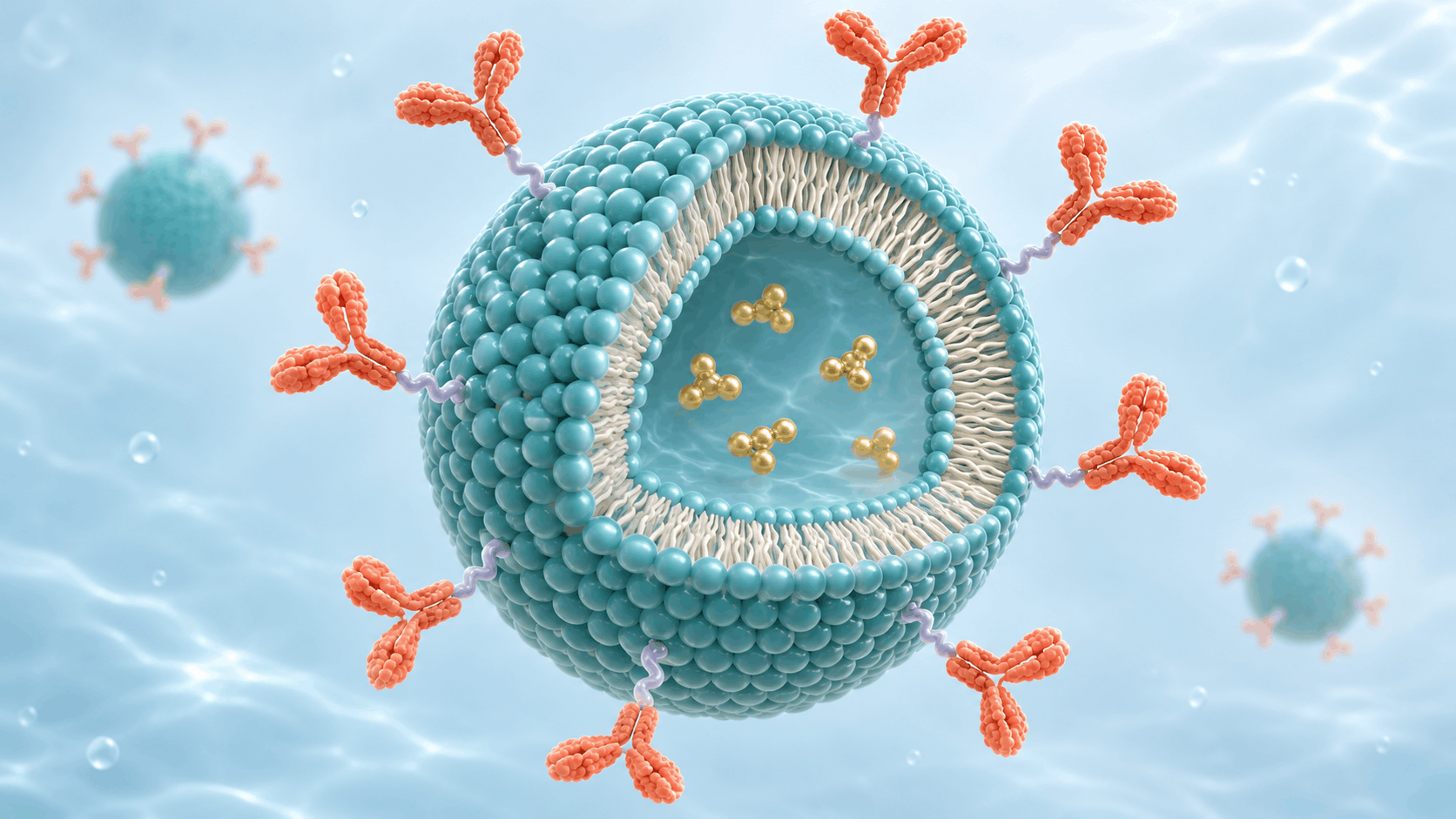
For formulation scientists, an antibody-modified liposome is not ready for further study simply because an antibody has been attached. Does conjugation alter particle size or dispersity? Why might formulations with similar encapsulation efficiency show different release profiles? Which measurements can guide the next design iteration? These are practical questions for biotech and pharmaceutical R&D teams assessing antibody-targeted delivery systems.
Immunoliposomes combine the molecular recognition potential of antibodies with the drug-carrying capacity of lipid vesicles. Depending on payload properties, compounds may be incorporated into the aqueous core or lipid bilayer. Evaluating antibody presentation, carrier characteristics and payload behaviour together can provide a more useful basis for formulation selection.
Aligning Antibody Selection with Liposome Formulation
Antibody format, including immunoglobulin G (IgG), antigen-binding fragments (Fab) and single-chain variable fragments (scFv), can influence how targeting ligands are presented on the liposome surface. Conjugation chemistry, lipid composition and drug-loading strategy also need to be considered together, as changing one variable may affect particle properties or payload retention.
Through its immunoliposome development services, Creative Biolabs supports antibody production, coupling, liposome formulation and drug loading. These capabilities help teams establish candidate formulations around a chosen antigen, antibody format and payload, then identify design variables for comparison.
Crucially, successful antibody attachment does not itself demonstrate antigen recognition, cellular uptake or effective intracellular delivery; each represents a separate evaluation endpoint.
Using Physicochemical Data to Narrow Formulation Choices
Particle size, polydispersity index (PDI), zeta potential and morphology can reveal changes associated with antibody modification or adjustments to the lipid composition. Encapsulation efficiency (EE) and drug loading (DL) add a payload-focused view, allowing teams to compare how formulations retain or carry the compound of interest under defined measurement conditions.
Creative Biolabs provides lipid-based basic characterisation services, including dynamic light scattering (DLS) for hydrodynamic particle size and PDI, morphology assessment and relevant measurements of surface properties and drug content. To quantify encapsulated versus free compounds, suitable separation or sample preparation is needed before spectroscopic or chromatographic analysis; the instrument reading alone does not distinguish these fractions.
Taken together, these measurements can highlight differences in size distribution, surface charge or loading after coupling or reformulation. They help R&D teams decide which candidates warrant further work and which formulation variables may need optimisation.
Comparing Release Profiles Under Defined Conditions
Similar particle characteristics and EE values do not necessarily imply similar drug-release behaviour. Lipid composition, payload chemistry and experimental conditions can produce different time-dependent release profiles, making a consistent analytical approach important when comparing candidates.
Creative Biolabs offers in vitro release kinetics analysis adapted to formulation properties and research needs. Release medium, temperature, agitation, sink conditions and separation method can all influence the resulting profile. Dialysis may be suitable for some systems, but membrane diffusion can affect apparent release rates; method suitability and free-drug controls should therefore be considered when interpreting the curves.
Release data collected under comparable conditions can help identify early leakage or more prolonged release patterns, informing subsequent adjustments to lipids, drug loading or assay design.
Turning Formulation Evidence into the Next Research Step
A coordinated evaluation of antibody modification, particle properties and release behaviour can make comparisons more actionable than any single test result. These measurements should still be interpreted alongside separate studies of stability, functional targeting and, where relevant, in vivo performance; they do not independently establish therapeutic efficacy.
Biotech, pharmaceutical and academic teams can contact Creative Biolabs to discuss their target antigen, antibody format, payload and formulation objectives, and define a project-specific development and analytical plan.
About Creative Biolabs
Creative Biolabs provides lipid-based delivery development and analytical research services to biotechnology and pharmaceutical organizations worldwide. Visit https://www.creative-biolabs.com/lipid-based-delivery/ for further information.
For Research Use Only. Not For Clinical Use.