
Considerations for Technical Transfer and Scale-Up of Protein Production at Ab Biotechnology
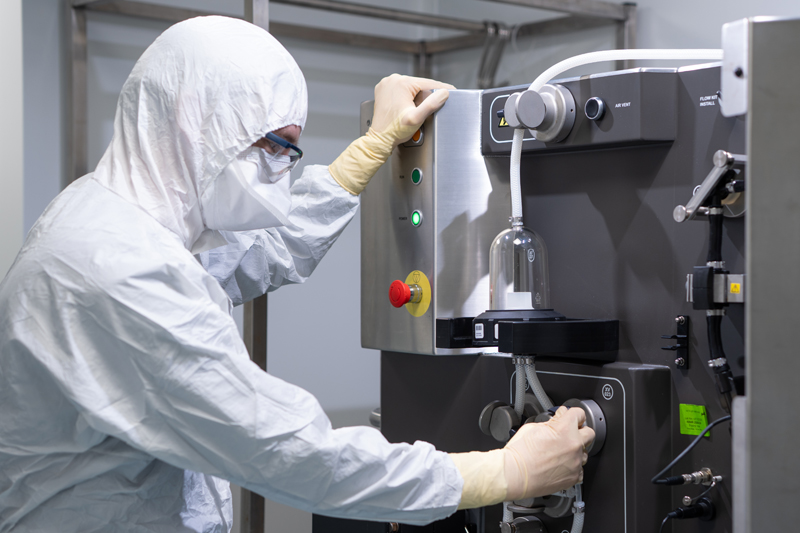
Transferring a protein purification process from an R&D or development lab to GMP manufacture is one of the most important and challenging transitions in bioprocessing. Technical Transfer isn’t just about scaling up; it’s about translating a flexible, research-focused process into one that is robust, controlled, validated, and compliant.
At Ab Biotechnology we have extensive experience in the Technical Transfer of protein production for GMP manufacturing.
What are our key steps and decisions for this process?
1. Process Understanding and Definition
- Ensure a deep understanding of the process design — how changes in parameters affect yield, purity, and critical quality attributes (CQAs). Define and justify proven acceptable ranges.
- Identify and document Critical Process Parameters (CPPs) and Critical Quality Attributes (CQAs).
- Confirm that all stages of the process (e.g., capture, intermediate, polishing, filtration) are scientifically justified, scalable and robust.
- Ensure development data supports robustness: impurity clearance, resin lifetime, hold times, buffer conditions and product stability during the process.
2. Equipment and Facility Compatibility
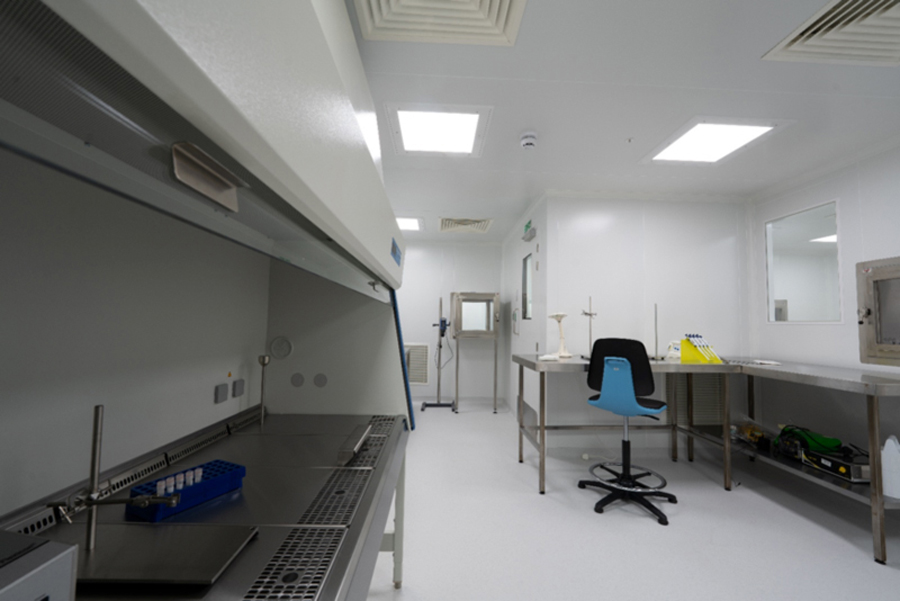
- Equipment in GMP facilities may differ in design, materials, and automation (e.g., stainless steel vs. single-use systems).
- Review process-to-equipment fit — column sizes, pump/flow rate capacities, filter areas, mixing capabilities.
- Confirm that the facility’s classified environment supports the required cleanliness and containment levels.
- Conduct Engineering run to verify equivalence to the development process.
3. Raw Materials and Reagents
- Replace research-grade reagents with GMP-grade or pharmaceutical-grade equivalents.
- Qualify all suppliers and verify traceability and certificates of analysis (CoAs).
- Implement incoming material testing and release procedures.
- Maintain contingency plans for supply shortages or incompatible lot changes.
4. Buffer and Solution Preparation
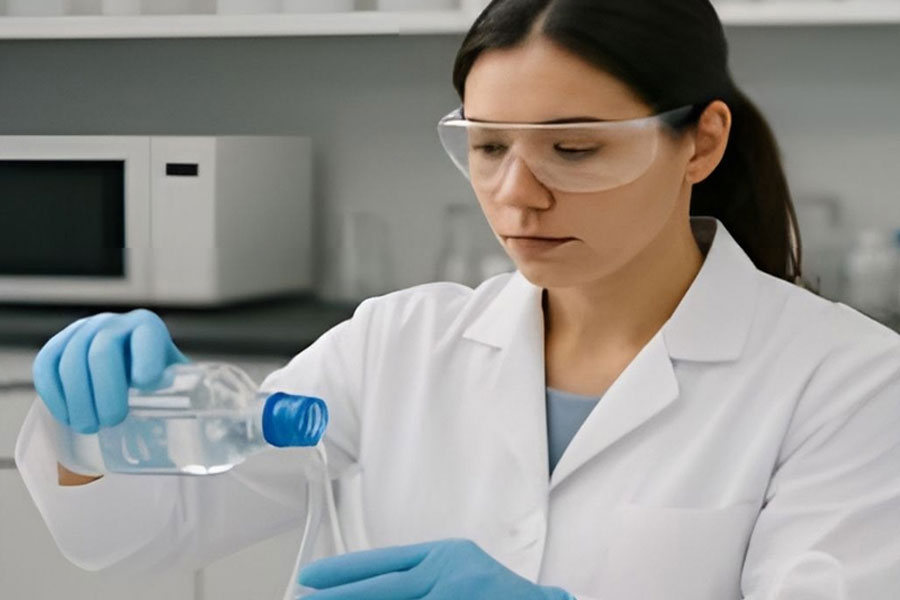
- Prepare buffers under controlled and validated conditions.
- Use sterile storage vessels and controlled environmental conditions.
- Document mixing times, pH adjustments, and filtration steps.
- QC testing and QA release of buffers for use in manufacturing.
- Scale-up introduces larger volumes of chemicals (buffers, acids, solvents). Perform risk assessment and waste management planning.
5. Chromatography and Filtration Steps
- Validate resin performance (binding capacity, pressure limits, sanitization compatibility).
- Establish column packing, testing, and cleaning procedures at scale.
- Define resin reuse policy with validated lifetime and leaching studies.
- Maintain equivalent load, flow rate and column height in GMP.
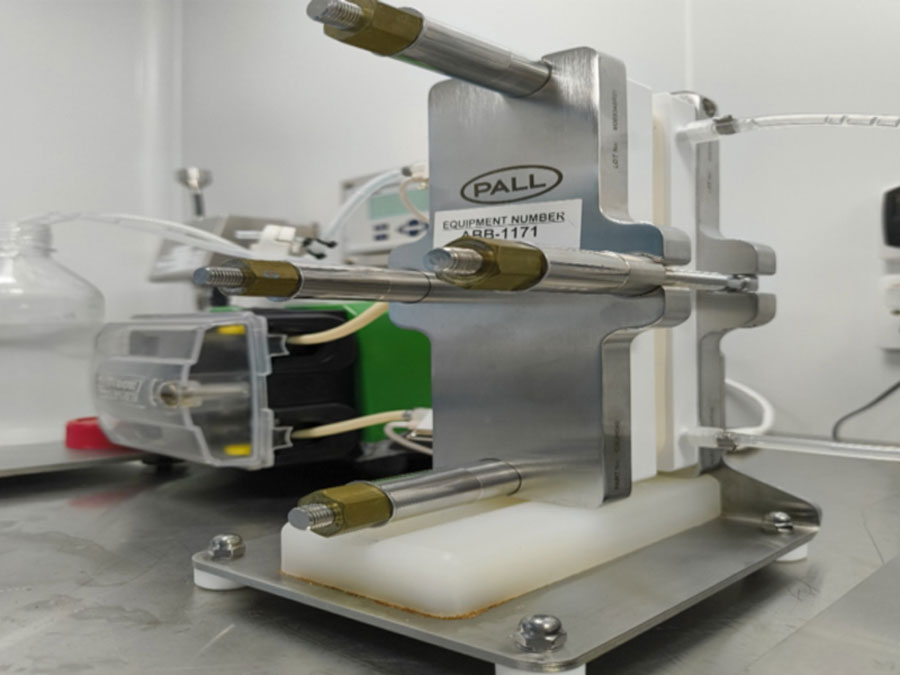
- Scale filtration (clarification, UF/DF, sterile filtration) based on flux, TMP, and fouling behaviour.
- Validate viral clearance steps.
6. Protein Stability and Product Quality
- Protein stability under scale-up conditions: temperature, pH, mixing and processing time.
- Validate in-process hold times and pool stability.
- Conduct comparability studies between development and GMP-scale lots.
- Monitor the process with in-process testing of samples during manufacture
7. Analytical Methods and QC Transfer
- Analytical assays must be validated and formally transferred to QC lab.
- Define specifications for purity, activity, identity, and impurities.
- Ensure in-process controls (IPCs) are representative of CQAs.
8. Documentation, QA, and Regulatory Compliance
Prepare a detailed Technology Transfer Package (TTP):
- Process description and flow diagrams
- CPPs, CQAs, acceptable ranges
- Analytical methods
- Cleaning and validation data
- Align with GMP documentation systems (batch records, SOPs, deviation and change control management).
- Ensure all personnel are trained in GMP procedures.
- Process performance qualification (PPQ) at commercial scale with a defined number of batches.
9. Organizational and Communication Aspects
- Establish clear roles and responsibilities between development and manufacturing teams.
- Maintain open communication between process development, QA/QC, and production. Schedule regular project meetings.
- Plan for training and shadowing during process development and initial GMP runs.
10. Process scale-down models
- Maintain representative small-scale (scale-down) models for incoming goods testing prior to future re-makes.
Summary
Transferring a protein production process from development scale to GMP manufacture introduces unique technical, quality, and regulatory challenges. At Ab Biotechnology we ensure:
- Scientific robustness (process behaves predictably at scale)
- Regulatory compliance (everything is validated, documented, traceable)
- Operational readiness (trained people, suitable equipment, qualified materials)
Please get in contact if you would like to see how we can support your projects: enquiries@abbiotechnology.com