
The Bionow BioAI Summit Bridges Life Sciences and Artifical Intelligence
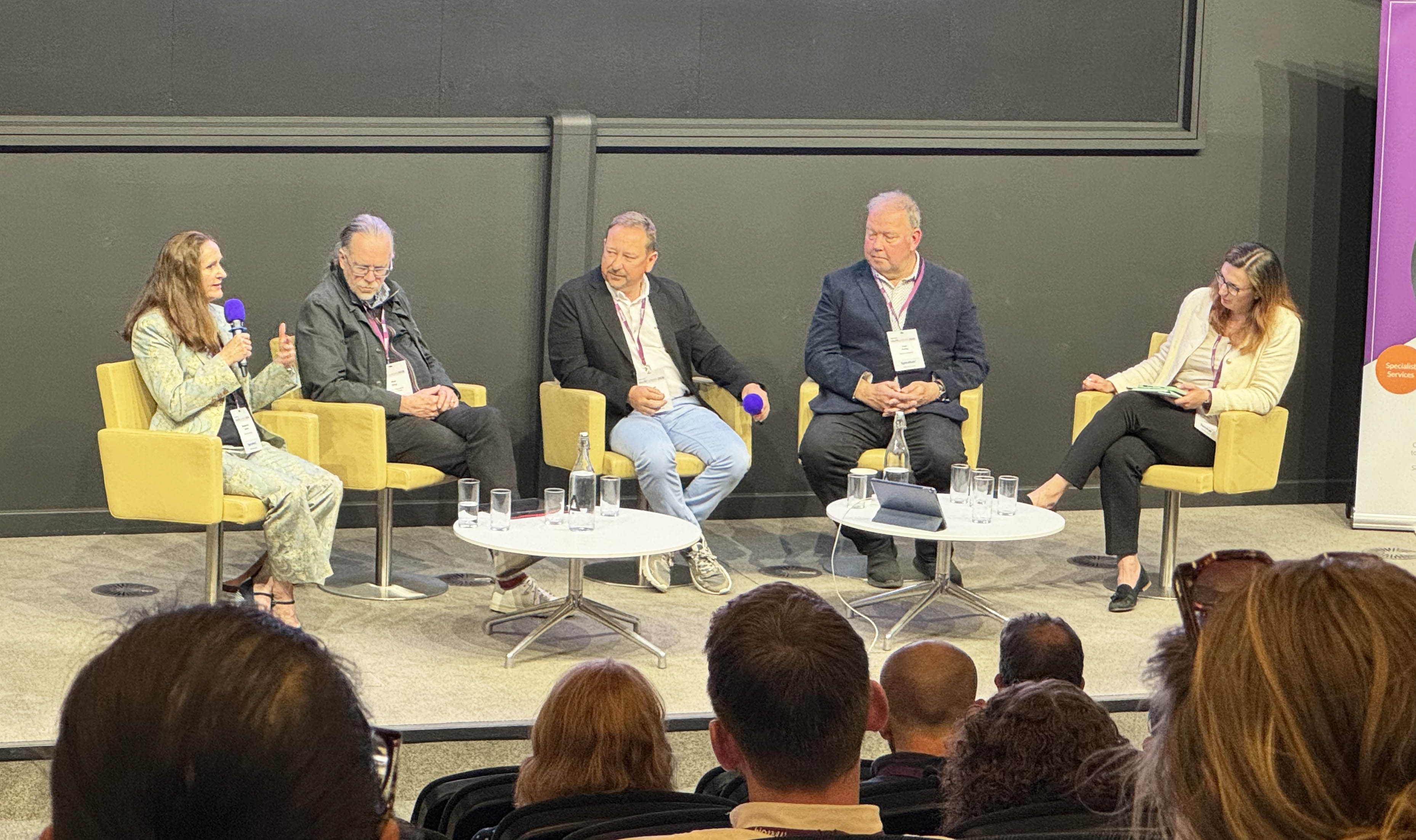
Following a successful launch last year, the Bionow BioAI Summit returned to Alderley Park on 29th April. The event welcomed over 100 delegates, speakers and exhibitors, all coming together to explore where artificial intelligence can deliver the most meaningful impact within the life sciences sector.
The agenda was led by experts from industry, academia, and healthcare, exploring topics including the applications of AI in general, as well as in R&D and Regulation & Validation, through a series of presentations and panel discussions.
Insightful keynote sessions were conducted by Gary Leeming, Deputy Director for the Civic Health Innovation Labs at the University of Liverpool, and Professor Jonathan Heddle, Founder of nCage Therapeutics and Lab Head at Durham University.
The first keynote, Design Approaches for AI in Health and Life Sciences by Gary Leeming, focused on the Liverpool City Region, where leading experts from academia, the NHS and industry are brought together to pioneer progressive civic data uses. It was explained that AI is already being used to accelerate discovery by simulating drug-protein interactions and improving biomarker discovery through the analysis of massive bio and clinical datasets. Beyond the laboratory, the delivery of care is being reshaped by technologies such as "Digital Twins" (which allow for risk-free testing of human biology) and personal health avatars that assist individuals in managing their own conditions.
Significant attention was also given to the ethical landscape of AI, with the point made that trust must be demonstrated through transparency and accountability rather than simply assumed. Risks such as data bias and the "overselling" of technology were addressed, highlighting why the Liverpool Data and AI Community Charter was established to guide responsible innovation. It was concluded that the success of these initiatives will be driven by human factors, such as upskilling the workforce and fostering a "digital commons", rather than the algorithms alone. By focusing on "trajectories" rather than just total health scores, the aim is to create a person-centred system that addresses complex civic health needs over the next three to five years.
The second keynote presentation, Engineering Biological Nanomachines and AI by Jonathan Heddle, set out a clear vision for engineering biology at the nanoscale, starting from the premise that natural systems already function as highly effective “nanomachines”, from viruses to ribosomes. It positioned the ability to design and build artificial biological machines as a potential “fifth industrial revolution”, with applications ranging from new vaccines and antibiotics to smart materials and cell repair. The concept was brought to life through work on programmable protein cages that can assemble and disassemble under specific conditions such as pH changes or light and deliver functional cargo into cells when appropriately targeted.
The keynote also highlighted how this platform is translating into real-world potential. Vaccine studies showed over a tenfold increase in antibody response with strong T-cell activation using the protein cage approach, while the same system offers a way to improve the safety of drug delivery by containing toxic payloads until they reach their target. AI underpins much of this progress, particularly in protein design and binder development, helping to accelerate innovation across diagnostics and therapeutics.
Across the summit, speakers were clear that AI is already part of everyday life sciences practice, but its real value comes from how it’s applied rather than how advanced the technology appears. This theme ran through the State of the AI Nation panel, where AI was described as embedded across discovery, data analysis, regulation and operations, but only effective when paired with strong domain expertise and critical evaluation. It was stressed that AI is a tool to augment scientific judgement, not replace it, and that poor data quality, lack of negative data and limited reproducibility remain the biggest constraints on impact.
A second strong thread was the shift from isolated AI models to integrated, learning systems that accelerate experimentation and decision-making. Several presentations highlighted the importance of connecting data capture, modelling and feedback loops in real research environments. Examples included computer vision to capture tacit lab activity, small‑data machine learning to guide early decisions, digital twins for experimental planning and closed‑loop AI‑robotics workflows. The emphasis was not on scale for its own sake, but on improving learning speed and confidence under real‑world constraints.
Regulation, trust and people were recurring considerations throughout both panels and applications sessions. The afternoon regulatory panel explored how regulators are increasingly engaged with AI, favouring risk‑based, use‑case‑specific frameworks over rigid rules, particularly as tools move closer to patients. Across clinical, diagnostic and health data examples, speakers highlighted the need for transparency, human oversight and robust governance, alongside continued skills development. Building trust with regulators, clinicians and patients was presented as essential to translating AI innovation into sustained, real‑world impact.
Commenting on the success of the conference, Geoff Davison, CEO of Bionow, said: "It was fantastic to be back at Alderley Park for our second BioAI Summit. Since our inaugural event, the pace of change has only accelerated, and it's clear that AI is no longer just a future prospect; it is actively reshaping R&D, diagnostics and patient care today. Our sessions this year have highlighted brilliant practical case studies and emerging technologies that show exactly how these tools are delivering a meaningful difference across the life sciences. The energy in the networking sessions proves that the potential for collaboration is stronger than ever."
The 2026 BioAI Summit was sponsored by Appleyard Lees and Bruntwood SciTech.